Healthy eating often comes down to what’s already in your kitchen. When the fridge is full of ingredients you know how to use, a balanced meal is the easy option. When it’s empty, takeaway wins. A simple weekly grocery shop is one of the most practical habits you can build, and it takes less time than you might think.
Here’s a step-by-step way to plan one shop that covers the week, without complicated meal plans or spreadsheets.
Step 1: Check what you already have
Before you write anything down, take five minutes to look in your fridge, freezer and cupboards. Note anything that needs using up soon, like vegetables, yogurt or bread, and plan to use those first. This simple habit saves money and reduces food waste.
Step 2: Sketch a loose plan for the week
You don’t need to plan every meal. Start with your main meals: decide roughly what you’ll eat on four or five evenings, and leave the other nights for leftovers or something flexible.
A balanced plate is a helpful guide. The NHS Eatwell Guide suggests basing meals on starchy foods (choosing wholegrain where you can), filling up on fruit and vegetables, and including some protein, such as beans, lentils, fish, eggs or meat. For more on this, see How to Build a Balanced Plate.
A tip for busy weeks: choose meals that share ingredients. A bag of spinach can go into an omelet, a pasta sauce and a lunchtime wrap. One tray of roasted vegetables can become two dinners.
Step 3: Write your list by section
Group your list by the areas of the store. It makes shopping faster and helps you avoid wandering down aisles you didn’t plan to visit. A simple structure:
- Fruit and vegetables: a mix of colors, plus a few that keep well, such as carrots, cabbage, onions and apples.
- Proteins: eggs, beans, lentils, tofu, fish or meat for your planned meals.
- Grains and starches: oats, wholegrain bread, brown rice, wholewheat pasta or potatoes.
- Dairy or alternatives: milk, plain yogurt or fortified plant-based options.
- Freezer: frozen vegetables, fruit and fish.
- Cupboard top-ups: anything running low, like canned tomatoes or spices.
Step 4: Make the freezer your friend
Frozen fruit and vegetables are a practical, affordable way to eat more plants. They keep for months, there’s no chopping, and you only use what you need. Frozen peas, spinach, berries and mixed vegetables are all easy to add to meals at the last minute, which means fewer “there’s nothing in” evenings at the end of the week.
Step 5: Shop with a plan, not a rulebook
- Eat before you go. Shopping hungry makes impulse buys much more tempting.
- Read labels when it helps. In the UK, front-of-pack “traffic light” labels give a quick view of fat, saturated fat, sugar and salt.
- Stay flexible. If a vegetable on your list looks tired, swap it for a similar one that’s fresher or on offer.
- Include a few treats. Healthy eating is about balance, not perfection.
Recommended from the Twily library
- PDF eBook 32 pages
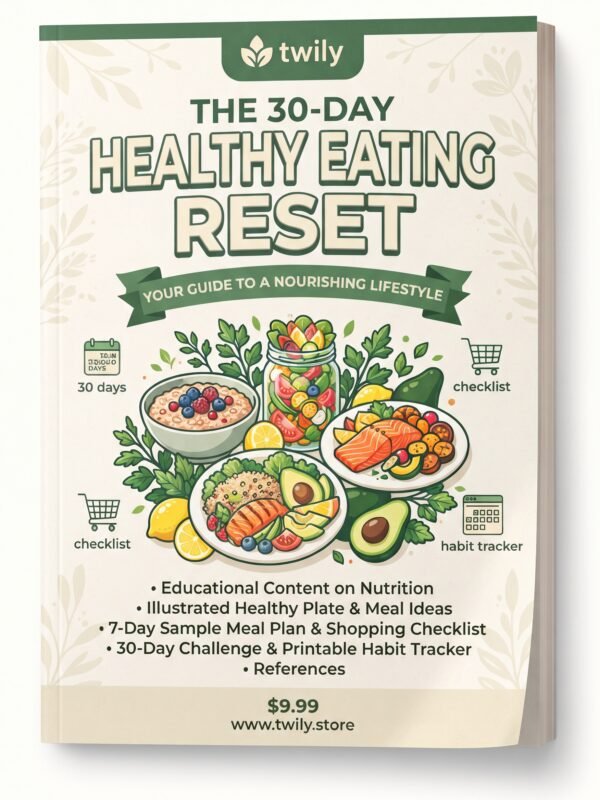
The 30-Day Healthy Eating Reset
Build better eating habits, one day at a time.
- 7-day sample meal plan
- Grocery shopping list
- Healthy plate guide
Step 6: Put things away with the week in mind
When you get home, spend ten extra minutes setting yourself up for the days ahead. Wash and chop a few vegetables, cook a batch of grains, or portion out snacks. Put the foods that need using first at the front of the fridge, where you’ll see them.
Keep a “master list”
After a few weeks, you’ll notice that many items appear on your list every time. Keep a master list of these regulars, on paper or in a notes app, and copy it each week. Then you only need to add the ingredients for that week’s meals. Planning gets quicker every time.
Start small
If planning a whole week feels like too much, start by planning just three dinners. Once that feels easy, add breakfasts or lunches. Small, repeatable steps are what turn a good intention into a habit that lasts.
If you follow a special diet, or have a medical condition or food allergy, a registered dietitian or your doctor can help you plan meals that suit your needs.
Further reading
- NHS, The Eatwell Guide
- NHS, How to read food labels