If you want a simple way to eat more healthily without counting or weighing anything, the “balanced plate” is a great place to start. It’s a visual guide used by many public health organizations, and it works for almost any cuisine or budget.
What is a balanced plate?
The idea is to divide your plate into rough sections:
- About half: vegetables and fruit
- About a quarter: protein foods
- About a quarter: whole grains or other starchy foods
- A small amount: healthy fats, such as olive oil, nuts or seeds
Alongside your meal, choose water or another unsweetened drink.
This isn’t a strict rule. It’s a flexible guide that helps you see at a glance whether a meal is well balanced.
The vegetable and fruit half
Vegetables and fruit add fiber, vitamins, minerals and plenty of volume to your plate. Variety is helpful, so aim for a mix of colors across the week.
Fresh, frozen and canned options all count. Frozen vegetables are often just as convenient as a ready meal: steam a bag of broccoli or mixed vegetables while the rest of dinner cooks. If you choose canned, look for options without added salt or sugar.
The protein quarter
Protein foods include beans, lentils, chickpeas, tofu, eggs, fish, poultry, lean meat and dairy foods such as yogurt. Many guidelines encourage including plant proteins like beans and lentils regularly, as they also bring fiber.
A practical tip: cook a large batch of lentils or beans at the start of the week, or keep a few cans in the cupboard. They are quick to add to salads, soups and wraps.
The whole grains quarter
Whole grains such as oats, brown rice, quinoa, barley, wholewheat pasta and wholegrain bread keep more of the original grain, including its fiber. Potatoes and other starchy vegetables can also sit in this section, especially with their skins on.
You don’t need to switch everything at once. Try mixing half white rice with half brown rice, or choosing wholegrain bread for sandwiches.
A little healthy fat
Small amounts of fats from foods like olive oil, avocado, nuts and seeds add flavor and help you enjoy your meals. A drizzle of oil on roasted vegetables or a sprinkle of seeds on a salad is plenty.
Balanced plate examples
Breakfast
Porridge made with oats (grains), topped with berries and a sliced banana (fruit), with a spoonful of plain yogurt and a few chopped nuts (protein and fats).
Lunch
A wholegrain wrap (grains) filled with hummus and chickpeas (protein), plus plenty of salad leaves, grated carrot, cucumber and tomato (vegetables).
Dinner
Baked salmon or tofu (protein), roasted potatoes with their skins on (starch), and a generous serving of green beans and roasted peppers (vegetables), finished with a little olive oil.
Making it work in real life
Not every meal will look like a perfect plate, and that’s fine. Mixed dishes like soups, stews and stir-fries can still be balanced. Just think about what’s in the whole bowl. If a meal is light on vegetables, add a side salad or a piece of fruit afterwards.
It can also help to look at the day as a whole. If lunch was mostly bread, you might lean more on vegetables at dinner.
A quick self-check
Before you eat, ask yourself three questions:
- Is around half of this meal vegetables or fruit?
- Is there a source of protein?
- Is there a wholegrain or starchy food to keep me satisfied?
If the answer is “mostly yes”, you’re doing well.
Start with one meal
Pick the meal that feels easiest to change, often lunch or dinner, and practice building a balanced plate for one week. Once it feels natural, apply the same idea to your other meals. For more beginner-friendly ideas, see 10 Simple Healthy Eating Habits for Beginners.
Recommended from the Twily library
- PDF eBook 32 pages
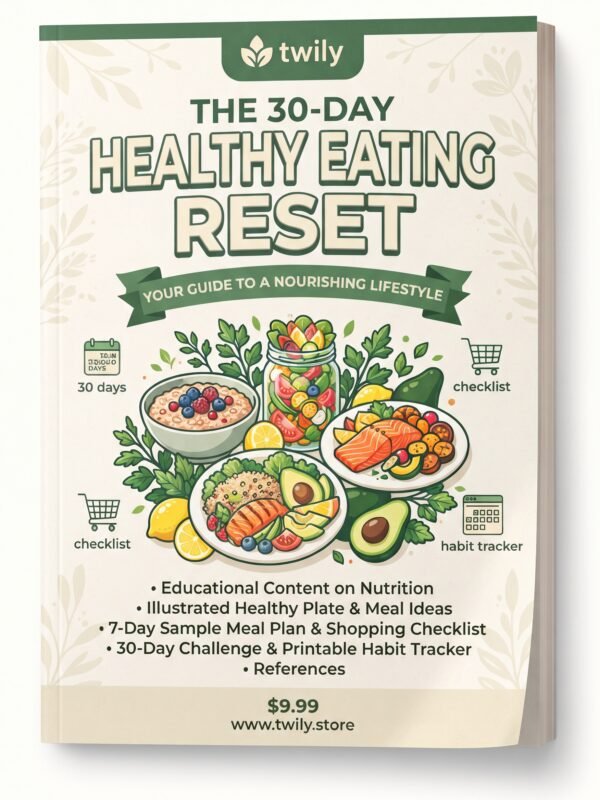
The 30-Day Healthy Eating Reset
Build better eating habits, one day at a time.
- 7-day sample meal plan
- Grocery shopping list
- Healthy plate guide
A note on individual needs
The balanced plate is a general guide for healthy adults. Children, older adults, athletes and people with medical conditions may have different needs. A registered dietitian can give you personalized advice.
Further reading
- Harvard T.H. Chan School of Public Health, Healthy Eating Plate
- USDA, MyPlate
- NHS, The Eatwell Guide