Food labels can look confusing at first, with numbers, percentages and colors all competing for your attention. But once you know where to look, a label takes only a few seconds to read, and it can help you compare similar products and make choices that suit you. This guide walks through the parts of a typical UK food label.
Start with the serving size
Nutrition information is usually shown per 100g (or 100ml) and often per portion as well. The “per 100g” column is the most useful one for comparing two products, because it measures both in the same way. The “per portion” column tells you what you would actually eat, but check that the manufacturer’s portion matches the amount you normally have.
Front-of-pack traffic lights
Many UK products show a color-coded panel on the front of the pack for fat, saturated fat, sugars and salt:
- Green means low.
- Amber means medium.
- Red means high.
A simple rule of thumb: when choosing between similar products, pick more greens and ambers and fewer reds. A red light doesn’t mean you can never eat a food. It’s a signal to enjoy it less often or in smaller amounts.
Reference intakes (%RI)
Labels often show what percentage of your “reference intake” a portion provides. Reference intakes are general guides based on an average adult, not personal targets. They’re most helpful for seeing at a glance whether one portion makes up a large share of the day’s suggested amount of something like salt or sugar.
Recommended from the Twily library
- PDF eBook 32 pages
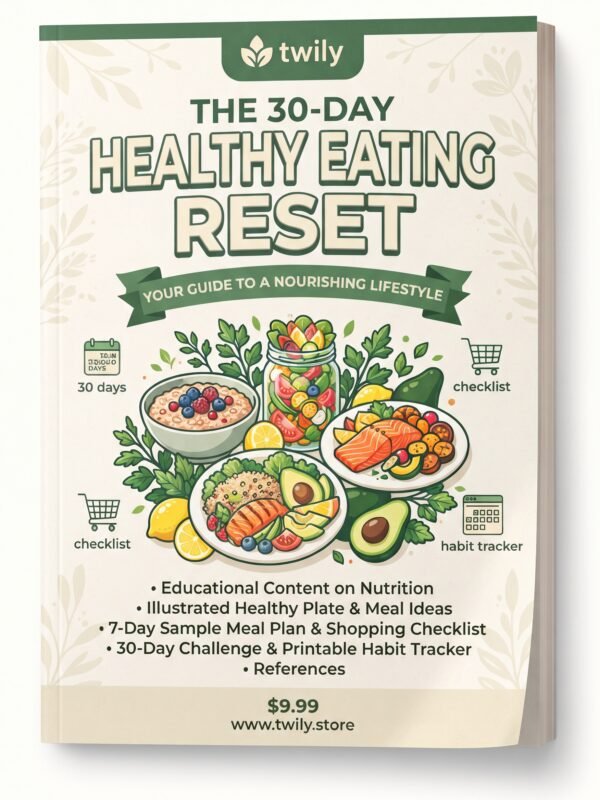
The 30-Day Healthy Eating Reset
Build better eating habits, one day at a time.
- 7-day sample meal plan
- Grocery shopping list
- Healthy plate guide
Read the ingredients list
Ingredients are listed in order of weight, with the largest amount first. If sugar, or another form of sugar, appears near the top of the list, the product contains a lot of it. Sugar can appear under several names, such as glucose syrup, honey, dextrose, maltose and fruit juice concentrate.
Allergens, such as milk, eggs, nuts, wheat and soya, are highlighted in the ingredients list, often in bold. If you have a food allergy, always check the full list, even on products you buy regularly, because recipes can change.
Three quick checks in the supermarket
- Compare per 100g when choosing between two similar products, like two breakfast cereals.
- Glance at the traffic lights for salt, sugars and saturated fat.
- Check the first few ingredients to see what the product is mostly made of.
Keep it in perspective
Labels are a helpful tool, not a test you have to pass. Many of the most nourishing foods, like fresh vegetables, fruit, eggs and plain beans, have short ingredients lists or no label at all. For more everyday ideas, read 10 Simple Healthy Eating Habits for Beginners and How to Plan a Simple Weekly Grocery Shop.
If you have a medical condition or follow a special diet, ask your doctor or a registered dietitian which parts of the label matter most for you.
Further reading
- NHS, How to read food labels
- NHS, The Eatwell Guide