Starting to eat more healthily can feel overwhelming. Every week there seems to be a new rule, a new “superfood” or a new list of things to cut out. The good news is that you don’t need any of that to make a real difference. For most people, healthier eating is built from a handful of simple habits repeated often.
Here are ten beginner-friendly habits. You don’t need to start them all at once. Pick one or two that feel easy, practice them for a couple of weeks, then add another.
1. Add before you subtract
Instead of starting with a list of foods to avoid, start by adding something helpful. Add a handful of vegetables to your usual pasta, a piece of fruit to your breakfast, or a side salad to your lunch. Adding feels positive and is much easier to keep up than restriction.
2. Build your meals around a simple plate
A useful everyday guide is to fill about half your plate with vegetables and fruit, around a quarter with a source of protein, and around a quarter with whole grains or other starchy foods. You don’t need to measure. Think of it as a loose visual guide. We cover this in more detail in How to Build a Balanced Plate.
3. Choose whole grains more often
Swapping some refined grains for whole grains, such as brown rice, oats, wholewheat pasta or wholegrain bread, is a simple way to add more fiber. You don’t have to swap everything. Try one change, like your usual breakfast cereal or sandwich bread, and see how you like it.
4. Keep water within reach
Many people simply forget to drink. Keeping a glass or bottle of water on your desk, in your bag or by the kitchen sink makes it far more likely you’ll reach for it. Water is a better everyday choice than sugary drinks, and tea and coffee can also count towards your fluids.
5. Plan a few meals, not a whole week
Detailed meal plans can be hard to stick to. Instead, try planning just three or four dinners for the week ahead. Write them down, check what you already have, and shop for those meals. It reduces last-minute decisions and food waste.
6. Shop with a list
A short shopping list keeps you focused and helps you avoid buying things you didn’t plan to. Organize the list by area of the shop (produce, dairy, pantry) to make it quicker. Over time, you’ll notice which healthy staples you buy every week.
7. Make healthy snacks the easy option
We tend to eat what is closest and most convenient. Keep fruit in a bowl on the counter, wash and chop vegetables when you get home from shopping, and keep plain nuts or yogurt in easy reach. When the healthy option is also the easiest one, it’s more likely to be your choice.
8. Slow down at meals
Eating more slowly gives you time to notice when you’re comfortably full. Try putting your fork down between bites, sitting at a table rather than eating at your desk, or simply taking a breath before you start. These small pauses can make meals more enjoyable too.
9. Read labels with one question in mind
Food labels can be confusing. As a beginner, focus on one thing at a time. You might compare two breakfast cereals for added sugar, or two breads for fiber. One clear question makes labels much more useful.
10. Aim for progress, not perfection
Healthy eating is about your overall pattern, not single meals. A takeaway on a Friday night or cake at a birthday doesn’t undo your progress. If you have an off day, simply return to your habits at the next meal, with no guilt required.
How to get started this week
Choose two habits from this list that feel achievable right now. Write them somewhere you’ll see them, like a note on the fridge. At the end of the week, notice what went well and what got in the way. Small adjustments are part of the process.
If you’d like a little more structure, a simple daily tracker can help you see your progress and stay consistent without overthinking it.
Recommended from the Twily library
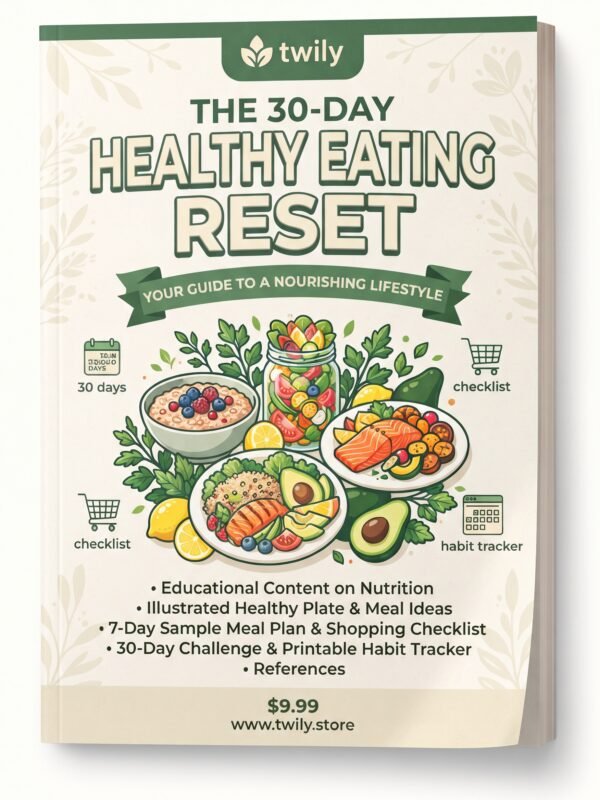
- PDF eBook 32 pages
The 30-Day Healthy Eating Reset
Build better eating habits, one day at a time.
- 7-day sample meal plan
- Grocery shopping list
- Healthy plate guide
A note on individual needs
Everyone’s nutritional needs are different. If you have a medical condition, are pregnant, take medication, or have a history of disordered eating, please speak with a doctor or registered dietitian before making changes to your diet.
Further reading
- World Health Organization, Healthy diet fact sheet
- NHS, Eat well