Many of us start a new wellness plan full of motivation, only to find that it fades within a few weeks. That’s not a personal failing. Big, sudden changes are simply hard to keep up alongside work, family and everyday life.
A more sustainable approach is to focus on small habits: changes so easy that you can do them even on a busy or difficult day. Over time, these small steps add up.
Why small habits work
Small habits work because they:
- Need less motivation. You can do them even when you’re tired.
- Build confidence. Each success makes the next step feel easier.
- Fit into real life. They don’t require hours of free time or major disruption.
A useful approach is to make a habit so small that it feels almost too easy. You can always do more on good days.
How to build a small habit
Anchor it to something you already do
Link your new habit to an existing routine. This is sometimes called “habit stacking”. For example:
- “After I pour my morning coffee, I’ll drink a glass of water.”
- “After I brush my teeth at night, I’ll write one line in my journal.”
- “After I finish lunch, I’ll take a five-minute walk.”
Make it obvious and easy
Place reminders where you’ll see them. Keep a water bottle on your desk, your walking shoes by the door, or a book on your pillow.
Track it simply
A tick on a calendar is enough. Seeing a streak build can be motivating. If you miss a day, aim not to miss two in a row.
Small habits to try
Here are some ideas across different areas of wellness. Choose just one or two to start.
Eating
- Add one portion of vegetables to your lunch or dinner.
- Keep a bowl of fruit where you can see it.
- Drink a glass of water with each meal.
Movement
- Take a 10-minute walk after one meal each day.
- Stand up and stretch for a minute every hour while working.
- Take the stairs for one or two floors.
Rest
- Set a regular “wind-down” alarm one hour before bed.
- Put your phone on charge outside the bedroom.
- Get a few minutes of daylight soon after waking.
Calm
- Take three slow breaths before opening your email.
- Write down one thing that went well today.
- Spend five minutes outside without your phone.
Make habits flexible
Life changes, and your habits can too. Have a “minimum version” for difficult days. If your usual walk is 20 minutes, your minimum might be five. If your usual journaling is a page, your minimum might be one sentence. This keeps the habit alive even when time or energy is low.
Celebrate progress
It’s easy to focus on what we haven’t done. Instead, take a moment each week to notice what you have done. Small wins deserve recognition and help you keep going.
Build gradually
Once a habit feels automatic, often after several weeks, consider adding another. Building gradually like this is more sustainable than starting everything at once.
For ideas to get started, explore 10 Simple Healthy Eating Habits for Beginners or How to Start a Daily Walking Habit.
Recommended from the Twily library
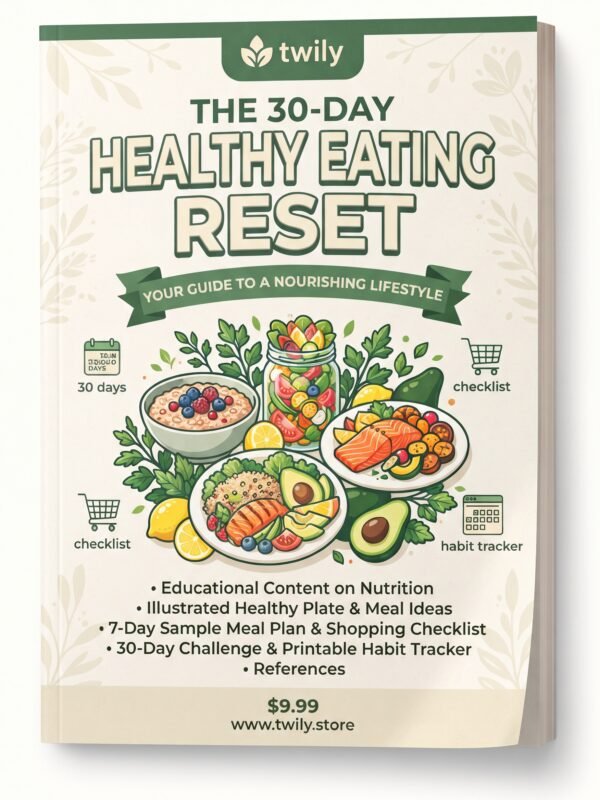
- PDF eBook 32 pages
The 30-Day Healthy Eating Reset
Build better eating habits, one day at a time.
- 7-day sample meal plan
- Grocery shopping list
- Healthy plate guide
- Twily
 The 30-Day Walking ChallengeMove more, feel stronger, and build an active routine. Coming soon
PDF eBook 30 pages
The 30-Day Walking Challenge
Move more, feel stronger, and build an active routine.
- 30-day walking calendar
- Activity tracker
- Warm-up guide
A gentle note
These are general wellness ideas. If you have a health condition or specific concerns, please speak with a qualified healthcare professional for advice tailored to you.
Further reading
- NHS Better Health, Healthier habits